In this interview, she reflects on
- her professional journey,
- the challenges faced by women scientists in low- and middle-income countries,
- and the importance of gender equity, inclusive practices, and international collaboration in strengthening research on neglected tropical diseases, including worm infections.
Why Gender Equity Matters in Global Health Research: A Conversation with Dr. Rella Zoleko Manego
Scientific research is not produced in a vacuum. Decisions about who produces knowledge, which perspectives are heard, and who ultimately benefits from research are shaped by structural inequalities. Addressing these gaps requires decolonising research practices and improving access to scientific careers for women and other underrepresented groups, so that the global scientific community can better advance health for all. Bringing together diverse perspectives is not simply a matter of principle; it strengthens research and can lead to better, life-saving outcomes.
For this year’s International Day of Women and Girls in Science, we had the privilege of speaking with Dr. Rella Zoleko Manego, clinician-scientist at the Centre de Recherches Médicales de Lambaréné (CERMEL) in Gabon.mbaréné (CERMEL) in Gabon.
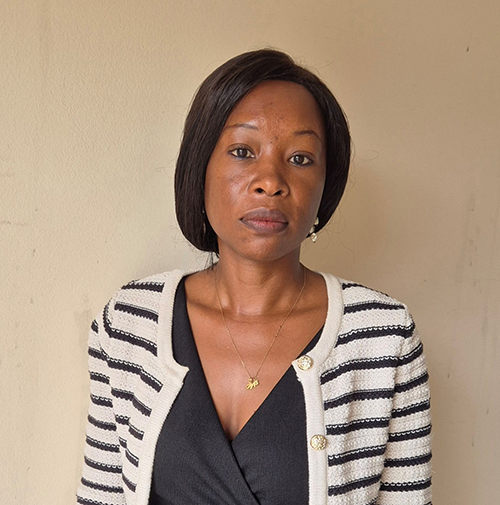
Dr. Rella Zoleko Manego
Dr. Manego, what and who inspired you to pursue a career in medicine and research, and how did you come to work at CERMEL?
My journey in the field of medicine and research is a mixture of personal inspiration, regional realities, and institutional opportunities.
Having grown up in a region where infectious diseases such as malaria are endemic, I witnessed their impact on families and communities, most of whom live in poverty. This experience instilled in me a deep sense of responsibility—not only to care for patients, but also to generate knowledge that can improve the situation on a larger scale. This is why I joined CERMEL.
CERMEL, a clinical research center specializing in tropical diseases, is committed to combining local relevance with international credibility, which aligns perfectly with my goals. Throughout my career, many clinicians and researchers have guided me, but two people in particular have inspired me and are my mentors. They advise me on both professional and personal matters and help me balance my work and family life.
What influenced your decision to focus on clinical trial research in infectious diseases?
My decision to focus on clinical research in infectious diseases was influenced by several factors: local health needs, my institution's mission, my professional strengths, and a personal commitment to equity and visibility in African science. It is a path that allows me to combine scientific rigor with a tangible impact on communities.
CERMEL, a reference center for clinical trials in Central Africa, places me in an environment where clinical trials on infectious diseases are central to its mission. Living and working in Gabon, I am at the heart of a region where malaria, loiasis, and other tropical infections remain major public health challenges. At the same time, clinical trials are the gold standard for evaluating diagnoses and treatments.
My decision reflects a desire to produce evidence that is both scientifically rigorous and directly applicable to the realities of Africa and rural areas. Clinical trials are not limited to science; they also aim to build trust with participants and ensure that research benefits local populations.
What challenges do women scientists and clinicians commonly face when building research careers in low- and middle-income countries?
Women scientists and clinicians in low- and middle-income countries face multiple, interrelated challenges when building research careers.
- One major difficulty is balancing career and family responsibilities. Caregiving roles, including childcare, still disproportionately fall on women, which limits the time available for research, travel, and networking. This burden is often compounded by a lack of institutional support, such as flexible working arrangements, parental leave, or access to childcare facilities.
- Gender bias and discrimination also remain significant obstacles. Persistent stereotypes continue to question women’s competence in science and leadership, and women may be overlooked for promotions, lead authorship, or invitations to speak at conferences. In addition, subtle biases in peer review and hiring processes further reduce opportunities for career advancement.
- Another challenge is limited access to mentorship and professional networks. The underrepresentation of women in senior leadership positions means fewer role models and mentors for early-career researchers, while male-dominated networks often control access to collaborations, publications, and visibility.
- Finally, institutional and policy gaps play an important role. Many institutions in low- and middle-income countries lack gender equity policies or fail to enforce them effectively. Harassment and unsafe working environments, particularly in field research settings, also remain insufficiently addressed.
The focus of this year’s International Day of Women and Girls in Science is on showcasing solutions. From your perspective, what concrete practices help create more inclusive research environments for women?
Creating inclusive research environments for women requires practices that go beyond symbolic gestures and directly reshape the structures of science.
- One key area is equitable recruitment and promotion. Transparent criteria for hiring, promotions, and leadership roles, combined with gender-balanced selection committees, help reduce bias and ensure fair evaluation.
- Flexible and family-friendly policies are equally important. Providing parental leave, childcare support, and flexible working hours allows women to better balance professional and personal responsibilities. Normalizing career breaks and creating clear re-entry pathways also ensures that women do not lose momentum after maternity or caregiving periods.
- Capacity building and training play a crucial role as well. Ensuring that women have equal access to international fellowships, workshops, and advanced technical training strengthens their career development and visibility within the scientific community.
- Finally, safe and respectful work environments are essential. Clear anti-harassment policies, confidential reporting mechanisms, and mixed-gender fieldwork teams contribute to safer, more balanced research settings and help foster a culture of trust and inclusion.
What role do international collaborations and training opportunities play in strengthening gender equity in science?
International collaborations and training opportunities play a transformative role in strengthening gender equity in science because they open doors that local systems alone often cannot. In many regions, women face structural obstacles to entering or advancing in science. International partnerships help break these local barriers by providing alternative pathways, such as fellowships, exchange programs, and visiting researcher positions, that can bypass restrictive local norms.
These collaborations also offer global recognition. By giving women scientists visibility on international platforms, they strengthen their credibility and influence within their home institutions. In addition, training programs focused on advanced research methods, leadership, and grant writing equip women with the skills and tools needed to compete equally in demanding research environments.
Why is gender equity among researchers important for improving the quality and relevance of research on neglected tropical diseases, particularly worm infections?
Gender equity among researchers is crucial for improving the quality and relevance of research on neglected tropical diseases (NTDs), including worm infections, for several reasons. Gender-diverse research teams bring varied viewpoints, experiences, and problem-solving approaches, which help identify research questions and solutions that might be overlooked by more homogeneous groups, leading to more comprehensive results.
In addition, gender equity contributes to more equitable access to health services. Gender norms influence who seeks treatment and how health services are delivered, and gender-balanced research teams are more likely to recognize and address these barriers in the design and implementation of programs.
What advice would you give to young girls and women who aspire to careers in science, medicine, or global health?
For young girls and women aspiring to careers in science, medicine, or global health, I would offer a few key pieces of advice.
- First, believe in your potential and trust that your ideas, questions, and contributions matter. Do not let stereotypes or societal expectations limit your ambitions.
- Second, seek mentors and role models who can guide you, inspire you, and help you navigate challenges. Look for role models, particularly women in your fields of interest, whose career paths you can learn from.